
Impact Piano Transcriptions
Tempo is the rate at which a piece of music should be played, defined by the number of beats per minute. It should not be confused with a piece’s time signature, which defines how many beats are included in a bar of music (e.g. 4/4 time or waltz time).
Musical tempos can change throughout a piece, creating dynamic contrasts and conveying different emotions. For this reason, many classical composers use tempo markings to guide their performers in making these changes. These tempo markings usually take the form of Italian words like “accelerando” (speeding up) or “ritardando” (slowing down). A ritardando generally indicates a gradual change, while an accelerando may be used to build up to a climax or transition to a reflective or more contemplative section of a piece.
A pianist’s interpretation of a piece’s tempo can make or break its success, so it is important to understand how the music should be played and when. This is why many musicians practice their pieces with a metronome, which can help them to internalize the tempo and beats of a song or composition.
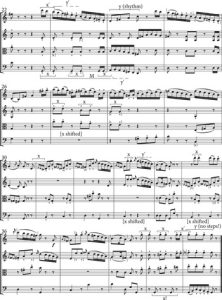
How Do Tempo and Pacing Considerations Impact Piano Transcriptions?
There are also a variety of other ways that tempo can be communicated, such as referring to it by a number in conjunction with a range or specific tempo mark, e.g. MM = 120 (meaning 120 crotchets, or quarter notes, per minute). This system of numerical tempo indications originated in the first half of the 19th century with the invention of the mechanical metronome by German inventor Johann Nepomuk Maelzel. Ludwig van Beethoven’s use of this device helped to popularize these types of numerical tempo markings.
In addition to using tempo markings, some classical musicians also employ rubato, or expressive speed variations. These can occur in conjunction with other tempo markings or on their own, to add emotion and character to a performance. These can include short durations of acceleration or slowing down, to build tension or a sense of anticipation, or as a means to express sadness, anger, or other emotions.
Some musicians prefer to play their pieces consistently, maintaining a fixed tempo throughout the entire piece. This method can give the music a strong and solid foundation, and is especially useful for composers who have written works with complex rhythms.
In contrast, others enjoy the creative freedom provided by changing tempo and pacing to support their musical interpretations. This is known as dynamic phrasing and can create an engaging and compelling performance that captures the spirit of the composer’s intent. For this reason, it is important for aspiring pianists to understand the full range of options available when transcribing a piece and playing it. While some students might prefer to start out with a strict metronome-based approach, it is helpful to allow students to experiment and find the right approach for them as they progress through their studies. In doing so, they will learn to recognize the places where a tempo change or a pacing adjustment would be beneficial.